 Save
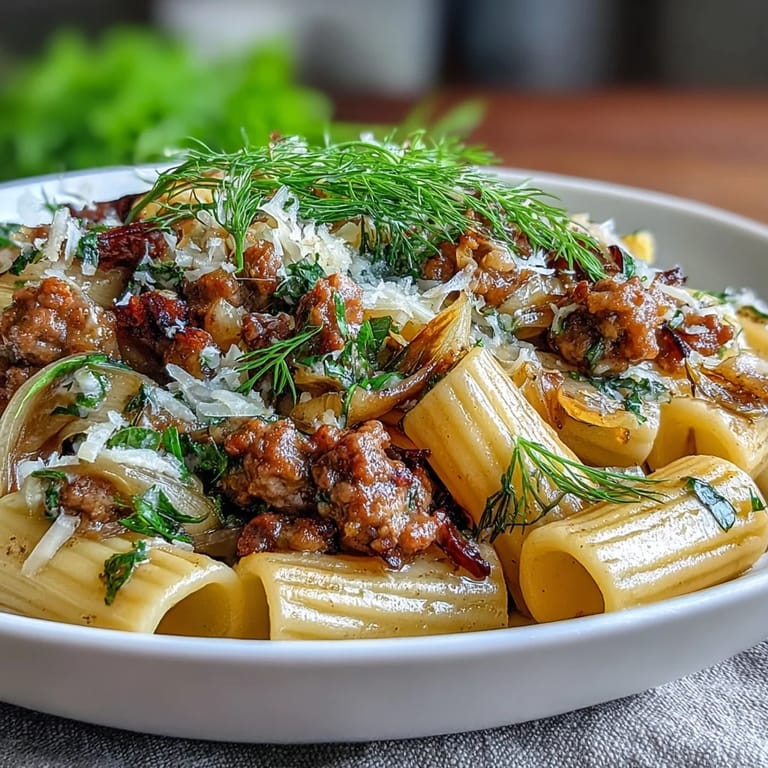
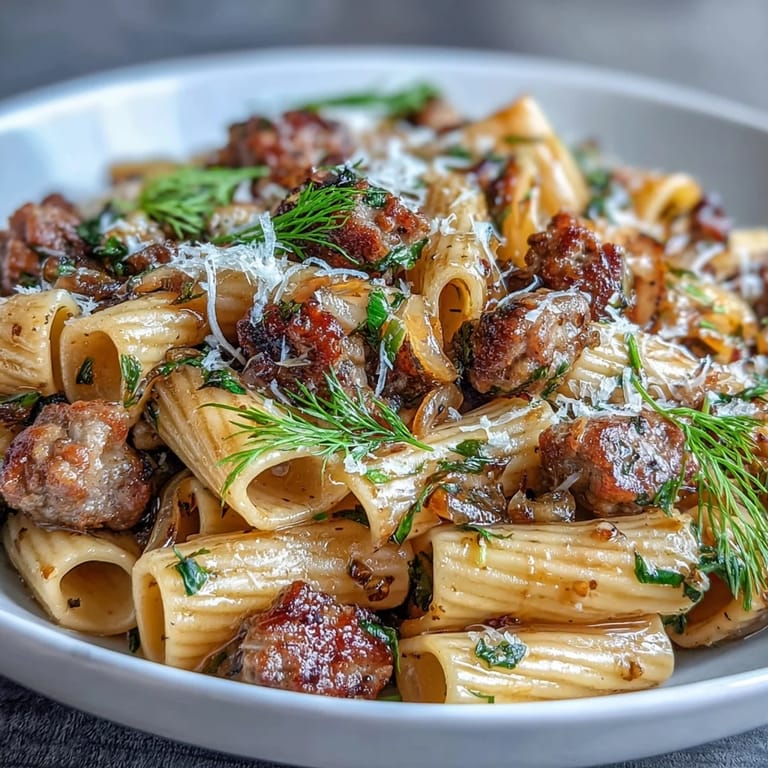
Save There's something about fennel that stops me mid-chop, makes me pause and just breathe in its licorice sweetness before the knife hits the board. One November evening, I was standing in my kitchen watching the light fade, feeling that familiar restlessness that comes with shorter days, when I decided to throw together whatever felt good—sausage, fennel, pasta, wine. Twenty minutes later, the whole apartment smelled like a Roman trattoria, and suddenly the season didn't feel so heavy anymore.
I made this for my friend Marcus on a Tuesday when he showed up at my door in that worn-out coat, the one that means he's been carrying too much that week. We didn't talk much while the pasta water boiled, but by the time we sat down with steaming bowls and that pale wine, something shifted. Food does that sometimes—it doesn't fix what's heavy, but it gives you permission to set it down for a moment.
Ingredients
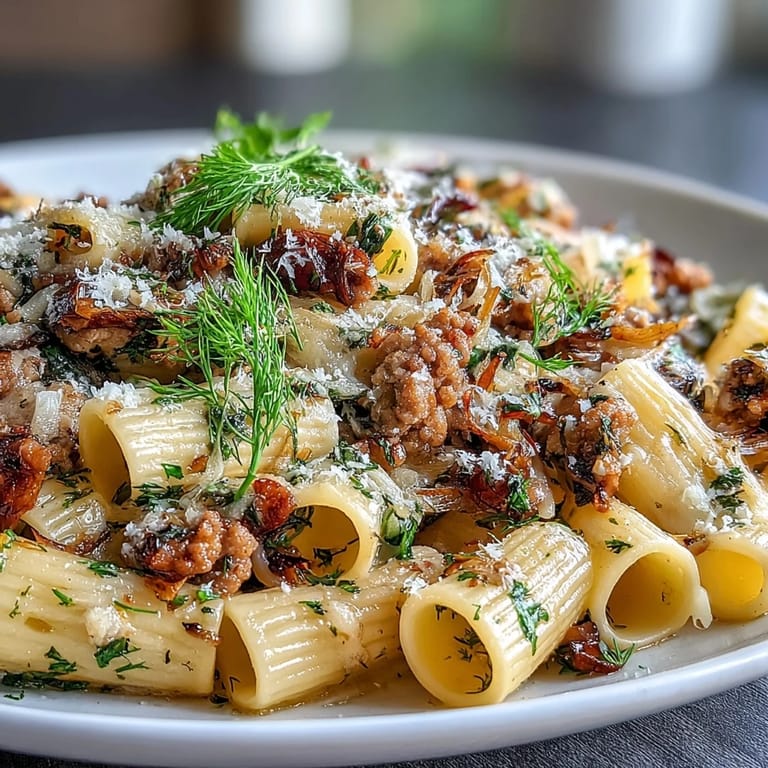
- Short pasta (penne, rigatoni, or fusilli): 350 g or 12 oz, and yes, the shape matters slightly because these curvy pieces catch the fennel and sausage fragments beautifully—fusilli especially holds onto everything.
- Italian sausage: 250 g or 9 oz, sweet or spicy depending on your mood, casings removed because you want the meat to break down and distribute throughout, not sit in chunks.
- Fennel bulb: 1 large one, trimmed and sliced thin, and this is where the entire personality of the dish lives—don't skip it or rush the slicing.
- Onion: 1 small one, thinly sliced, acts as a gentle sweetness that plays against the fennel's more assertive flavor.
- Garlic: 2 cloves minced, added late so it stays bright and doesn't turn bitter in the pan.
- Olive oil: 2 tbsp total, split between cooking the sausage and sautéing the vegetables, enough to create a light, silky finish without heaviness.
- Dry white wine: 60 ml or 1/4 cup optional but recommended, because it picks up all those caramelized bits stuck to the pan and transforms them into something aromatic.
- Crushed red pepper flakes: 1/2 tsp optional, a whisper of heat that wakes up your mouth without overpowering anything.
- Salt and black pepper: To taste throughout, because seasoning in layers as you cook always beats seasoning at the end.
- Parmesan cheese: 30 g or 1/4 cup grated, plus more for the table because everyone always wants more, and it melts into the hot pasta creating little pockets of umami.
- Fennel fronds or parsley: Chopped fresh for garnish, the final bright note that says you cared enough to finish it properly.
Tired of Takeout? 🥡
Get 10 meals you can make faster than delivery arrives. Seriously.
One email. No spam. Unsubscribe anytime.
Instructions
- Start the water and pasta:
- Fill a large pot with water, salt it generously so it tastes like the sea, and let it come to a rolling boil where you can hear it calling from the other room. Cook your pasta according to the package timing, but taste it a minute or two early because al dente is the goal—you want that slight resistance, that tender-but-still-toothy feeling that restaurant pasta has.
- Cook the sausage:
- While water heats, warm a large skillet over medium flame and add 1 tbsp of olive oil. If you're using sausage, crumble it directly into the hot oil, breaking it apart with a wooden spoon as it hits the pan—it should sizzle immediately, a sound that means you're on the right track. After 4 to 5 minutes, it'll be golden-brown and cooked through; move it to a waiting plate.
- Caramelize the fennel and onion:
- Add the remaining olive oil to the same skillet, then introduce the fennel and onion with a small pinch of salt, which draws out their moisture so they soften rather than stick. Watch them for 4 to 5 minutes, stirring occasionally, until their edges turn golden and the sharp bite of the onion mellows into something sweet.
- Build aromatic depth with garlic and wine:
- Stir in your minced garlic and let it warm for just 1 minute—you're looking for that moment when it smells incredible but before it darkens. Pour in the white wine if using, scraping the bottom of the pan with your spoon to free up all the caramelized flavor stuck there, and let it bubble gently for 1 to 2 minutes until mostly evaporated, leaving behind this concentrated, winey essence.
- Combine everything:
- Return the sausage to the skillet, add your red pepper flakes if you want that warmth, and pour in the drained pasta along with that reserved pasta water you set aside. Toss everything together over medium heat for a minute or so, then stir in the Parmesan, which will gradually melt and coat everything in a light, glossy sauce made partly from the cheese and partly from the starchy pasta water.
- Season and serve:
- Taste it, adjust the salt and pepper as needed, and serve immediately in warm bowls with a scattered handful of fennel fronds or parsley and more Parmesan on the side because that's how people like it.
 Save
Save What I didn't expect was how a simple bowl of pasta would become a quiet ritual in my kitchen, something I'd make on nights when I wanted to feel a little closer to Italy without leaving home. The fennel's licorice notes remind me that some flavors only make sense if you let them, if you trust them enough to try.
The Fennel Question
Fennel splits people into two camps: those who immediately recognize its subtle anise whisper as comfort, and those who encounter it for the first time and feel slightly betrayed by its complexity. I was in the second group once, skeptical and resistant, until I learned that fennel doesn't announce itself—it hides in the background, making everything around it taste more like itself. In this pasta, it's the secret ingredient that people taste but can't name, the reason they keep asking for the recipe.
When Sausage Isn't the Point
The vegetarian version of this pasta is genuinely excellent, not a consolation prize made for guests with dietary preferences. Without the sausage, the fennel and onion take center stage, their sweetness becomes more pronounced, and the whole dish feels lighter and somehow more seasonal. I've served it to both vegetarians and meat-eaters at the same table, and the vegetarians actually finish first, going back for seconds without the sausage even being missed.
Small Variations That Matter
This pasta welcomes additions like a good friend welcomes surprise guests—with genuine warmth and a willingness to make room. A handful of tender greens stirred in at the last moment transforms it into something heartier; a squeeze of lemon zest adds brightness that cuts through the richness. The base stays steady, but these little flourishes let you remake it as the season and your mood demand, turning one recipe into an entire conversation that lasts all winter.
- Baby spinach or kale wilts perfectly in the residual heat if you add it just before serving, no separate cooking required.
- A twist of fresh lemon zest wakes up the whole dish, especially if you've used spicy sausage and feel like tempering some heat.
- Crushed fennel seeds sprinkled on top add textural interest and double down on that licorice note in an unexpected way.
 Save
Save This pasta is the kind of meal that doesn't demand much but gives back generously, turning an ordinary evening into something that feels intentional and warm. Make it when you need comfort that doesn't require an excuse.
Recipe FAQs
- → Can I make this vegetarian?
Absolutely. Simply omit the sausage entirely or use a plant-based sausage alternative. The fennel and onion provide plenty of flavor on their own, and you can add extra vegetables like spinach or kale for more substance.
- → What type of pasta works best?
Short pasta shapes like penne, rigatoni, or fusilli are ideal because they catch the sauce and sausage pieces in their crevices. The ridges and tubes help hold onto the light, aromatic coating.
- → Is the white wine necessary?
Not strictly. The white wine helps deglaze the pan and adds subtle acidity, but you can substitute with additional pasta water or a splash of broth if preferred.
- → Can I prepare this ahead?
The components can be prepped in advance—slice the fennel and onion, remove sausage casings—but it's best cooked just before serving. The pasta texture is optimal when freshly tossed and served immediately.
- → What can I serve with this?
A crisp Italian white wine like Pinot Grigio complements the dish beautifully. A simple green salad with vinaigrette balances the richness, and crusty bread helps soak up any remaining sauce.