 Save
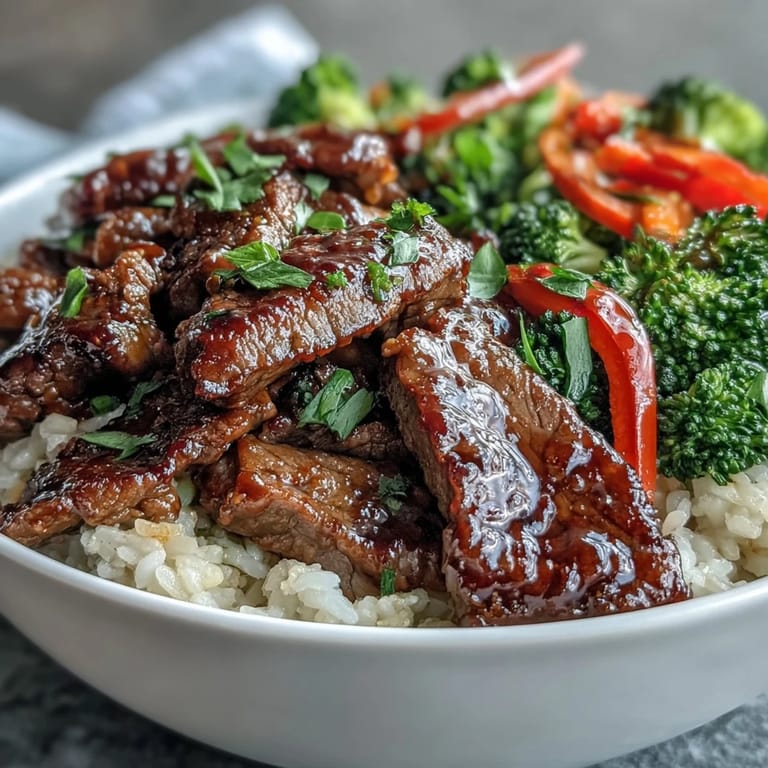
Save My neighbor brought over a teriyaki beef bowl one evening, and I watched her assemble it with such ease that I became convinced it was something only she could master. Weeks later, standing in my own kitchen with a wok that felt too hot and beef that kept sticking, I realized the magic wasn't in her hands but in understanding how the sauce comes together and trusting the high heat. Now this dish feels like second nature, though I still get that little rush of satisfaction when the glaze catches the light just right.
I made this for my partner on a quiet Tuesday night after a long day, nothing special planned, just the two of us and bowls of steaming rice. The kitchen filled with the smell of garlic and ginger sizzling in the pan, and somehow that simple aroma made everything feel intentional and calming. Halfway through dinner, he set his fork down and asked what was different about my cooking lately—turns out this bowl was the answer.
Ingredients
- Flank steak or sirloin, thinly sliced (500 g): Slice against the grain so each piece stays tender even after high-heat cooking; a partially frozen steak is easier to slice cleanly.
- Cornstarch: Coat the beef lightly so it develops a subtle crust that helps the glaze cling beautifully.
- Vegetable oil: Use neutral oil with a high smoke point because you're cooking at full heat.
- Soy sauce (80 ml): This is the backbone of the sauce, so don't skip it or water it down.
- Mirin (60 ml): Sweet rice wine that balances the salty soy; it's worth buying the real thing rather than substituting.
- Honey or brown sugar: Adds depth and helps the sauce coat the meat evenly.
- Rice vinegar (2 tbsp): A touch of brightness that keeps the sauce from feeling too heavy or one-dimensional.
- Garlic and fresh ginger: Mince and grate these yourself—the aroma alone tells you they're doing their job.
- Cornstarch slurry: Whisk cornstarch with cold water to thicken the sauce without creating lumps.
- Carrots, bell pepper, and broccoli: Cut them uniformly so everything cooks at the same pace.
- Spring onions: Use the white parts in the stir-fry and save the green tops for a fresh garnish.
- Sesame seeds: Toast them lightly before using, or buy pre-toasted for extra flavor.
- Cooked rice: Warm it just before serving so the warmth helps the sauce soak in slightly.
Tired of Takeout? 🥡
Get 10 meals you can make faster than delivery arrives. Seriously.
One email. No spam. Unsubscribe anytime.
Instructions
- Build the glaze foundation:
- Combine soy sauce, mirin, honey, rice vinegar, minced garlic, and grated ginger in a small saucepan and bring to a simmer over medium heat. You'll notice the mixture becoming more fragrant as it warms—this is when you know the flavors are beginning to marry together.
- Thicken the sauce:
- Whisk your cornstarch slurry (cornstarch mixed with cold water) into the simmering sauce and watch it transform from thin to silky in about 2–3 minutes. Remove from heat immediately so it doesn't over-thicken.
- Prepare the beef for cooking:
- Toss your thinly sliced beef with cornstarch until every piece is lightly coated; this helps it brown beautifully and keeps the texture tender inside.
- Sear the beef with confidence:
- Heat vegetable oil in a large skillet or wok over high heat until it shimmers, then add the beef in a single layer if possible. Let it sear undisturbed for about a minute so it develops color, then stir-fry for another 1–2 minutes until cooked through. The meat will look browned on the outside and stay tender inside.
- Stir-fry the vegetables:
- Remove the cooked beef to a plate and add carrots, bell pepper, and broccoli to the same hot skillet. Keep the heat high and toss constantly for 3–4 minutes until the vegetables are tender but still crisp; they should have a slight char on the edges.
- Bring everything together:
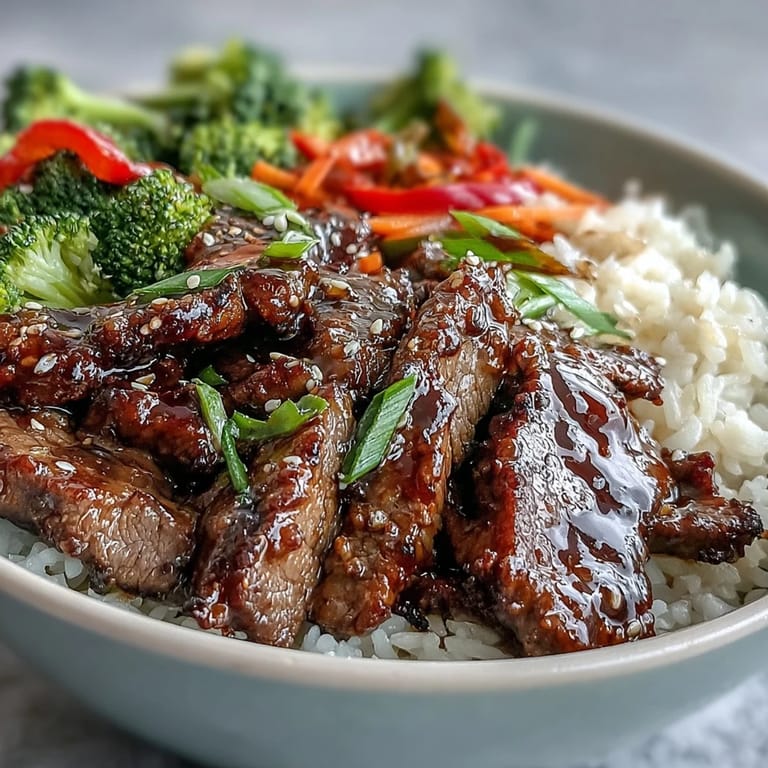
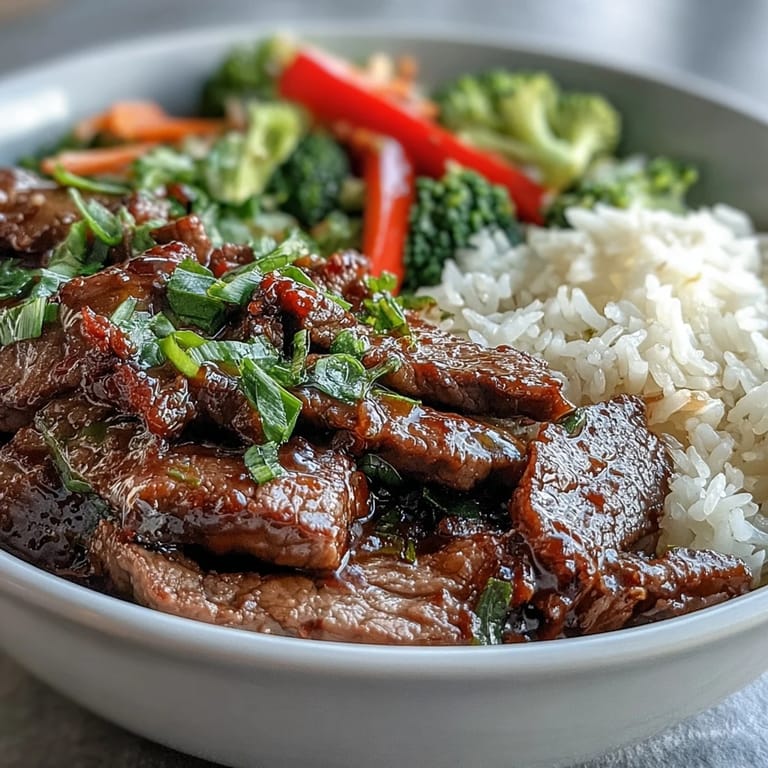
- Return the beef to the skillet, pour the teriyaki sauce over everything, and toss gently until every piece is coated in that glossy, caramelized glaze. A quick 1-minute warm-through ensures the heat is consistent throughout.
- Plate and garnish:
- Divide hot rice among bowls, top with the beef and vegetables, and scatter sliced spring onions and sesame seeds across the top for color and crunch.
 Save
Save There was a night when I nearly burned the sauce because I got distracted, and in that moment of panic, I learned that teriyaki is forgiving—it just asked me to stay present and finish strong. That simple lesson transformed how I cook everything now, not just this bowl.
The Art of the High-Heat Sear
The difference between tender, caramelized beef and tough, gray meat comes down to heat and confidence. When your oil is shimmering and your pan is hot enough, the beef's exterior sears in seconds, trapping the juices inside and creating that desirable crust. If your pan feels uncertain or the oil barely moves, trust your instinct and wait another 30 seconds—rushing this step is how you end up disappointed.
Why the Sauce Matters More Than You Think
A teriyaki bowl is only as good as its glaze, and that glaze is the sum of careful balance rather than bold individual flavors. The soy sauce provides saltiness and depth, the mirin brings sweetness and body, the rice vinegar adds brightness, and the cornstarch slurry gives you that restaurant-quality sheen that makes people ask if you went to culinary school. Once you understand this interplay, you can adjust to your own taste—slightly more vinegar if you like tang, a touch more honey if you lean sweet—and the sauce becomes your signature.
Customization and What Works Best
This bowl is a canvas, and some of my favorite versions came from creative detours rather than strict adherence to the original recipe. Chicken breast works beautifully if you slice it thin and watch the cooking time carefully, or tofu if you press it well and let it get golden before adding sauce. Vegetables are flexible too—snap peas add a delicate crunch, mushrooms deepen the umami, and even baby spinach wilts into the sauce like it was meant to be there.
- Swap the beef for chicken or tofu depending on what you have and what your appetite demands.
- Layer in mushrooms, edamame, or snap peas for vegetables that complement rather than compete.
- Make a double batch of sauce and store it in the fridge for quick meals throughout the week.
 Save
Save This bowl taught me that simple dishes often demand more attention than complicated ones, and that attention is love in a different form. Once you own this recipe, you've got a reliable friend in your kitchen.
Recipe FAQs
- → What cut of beef works best?
Flank steak or sirloin are ideal choices because they're lean, tender, and slice beautifully against the grain. Look for bright red meat with minimal connective tissue.
- → Can I make the teriyaki sauce ahead?
Absolutely. The sauce keeps refrigerated for up to two weeks. Make a double batch and store in an airtight container for quick meals throughout the week.
- → How do I get the beef tender?
Coating the beef in cornstarch before cooking creates a protective layer that seals in juices. Also, avoid overcrowding the pan and cook over high heat for just 2–3 minutes.
- → What vegetables can I add?
Snap peas, edamame, mushrooms, zucchini, or baby corn all work wonderfully. Use whatever crisp vegetables you have on hand for a colorful bowl.
- → Is this gluten-free?
Simply substitute regular soy sauce with tamari or a certified gluten-free soy sauce alternative. All other ingredients naturally fit a gluten-free diet.
- → Can I use chicken instead?
Yes. Use boneless chicken thighs or breasts, sliced thinly against the grain. Chicken may need an extra minute or two to cook through completely.