 Save
Save There's something about the sizzle of ground beef hitting a hot skillet that pulls me back to a Tuesday night when my Korean friend Min-jun casually walked me through this bowl in my kitchen, moving with such ease around the stove that I realized I'd been overcomplicating Korean food in my head. He laughed when I asked where the recipe came from—it wasn't anything fancy, just what his family made when they wanted something satisfying, quick, and real. That night, I understood that the best dishes aren't the complicated ones; they're the ones that taste like they know exactly what they're doing.
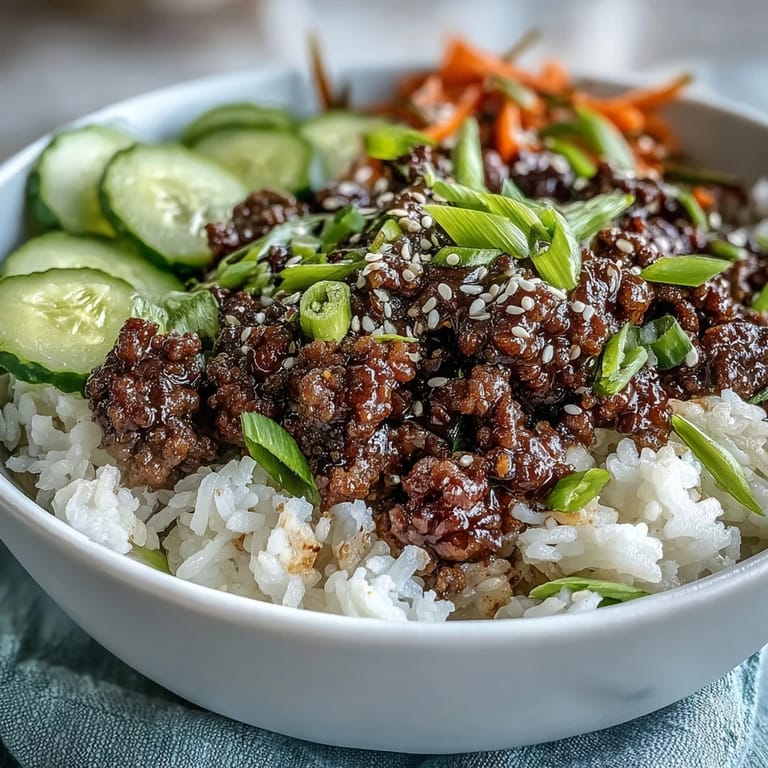
I made this for my partner on a Friday after we'd both had those draining days where everything feels heavy, and watching them light up at the first bite reminded me why I cook at all. The sesame seeds catching the light, the way the warm beef contrasted with the cool pickled vegetables—it felt like I'd handed them something that said 'I see you, rest now' without using any words at all.
Ingredients
- Lean ground beef (500 g): The backbone of this bowl—choose beef with just enough marbling to stay juicy without swimming in grease when it cooks.
- Soy sauce (2 tablespoons): Use tamari if you're steering clear of gluten, and don't skip the quality here because it's one of only a few seasonings doing the heavy lifting.
- Toasted sesame oil (1 tablespoon): This is liquid gold; the toasting is already done, so all you're getting is pure, aromatic flavor that transforms everything it touches.
- Brown sugar (1 tablespoon): A small amount mellows the salt and adds subtle depth that most people won't identify but will absolutely feel.
- Freshly grated ginger (2 teaspoons): Fresh is non-negotiable here—the brightness matters more than you'd think, and it wakes up your whole mouth.
- Garlic, minced (3 cloves): Don't use pre-minced if you can help it; fresh garlic mixed into that hot beef becomes something almost creamy.
- Gochujang or sriracha (1 teaspoon, optional): This is your heat and your secret weapon—even if you're not a spice person, a tiny amount adds complexity without burning.
- Green onions (2, thinly sliced): Save some for garnish because the fresh onion taste at the end is what keeps the bowl from feeling too heavy.
- Sesame seeds (1 tablespoon): Toasted is better, but raw works too—they add texture and that nutty finish that makes people ask for the recipe.
- Rice or cauliflower rice (4 cups cooked): Jasmine rice is traditional and smells incredible, but cauliflower rice lets this work for low-carb nights too.
- Carrot, julienned (1 cup): The vinegar softens them just enough while keeping them snappy—they're the quiet hero of the crunch factor.
- Cucumber, thinly sliced (1 cup): Keeps its cool, refreshing quality against the warm savory beef in a way that makes every bite feel balanced.
- Radish, thinly sliced (1/2 cup): Those thin slices turn peppery and almost sweet when pickled; if you've never tried it this way, you're missing something.
- Rice vinegar (1/2 cup): The gentle acidity that ties the whole thing together without shouting.
- Sugar (1 tablespoon) and salt (1/2 teaspoon): These dissolve into the vinegar and coat the vegetables with a light, clean brightness.
Tired of Takeout? 🥡
Get 10 meals you can make faster than delivery arrives. Seriously.
One email. No spam. Unsubscribe anytime.
Instructions
- Start with the pickled vegetables:
- Pour the rice vinegar into a bowl with sugar and salt, stirring until everything dissolves into clear liquid. This is your pickle brine, and patience matters here—let it sit for at least 15 minutes so the vegetables soften and soak up all that tangy flavor.
- Prepare your rice base:
- Cook your rice or cauliflower rice according to package directions and keep it warm. If you're using jasmine rice, your kitchen should smell amazing right now.
- Brown the beef with intention:
- Heat your skillet over medium-high until it's genuinely hot, then add the ground beef. Break it up with a spoon as it cooks, letting it sit for a moment between stirs so the bottom gets those browned, flavorful bits—this takes about 5 to 7 minutes.
- Build the flavor:
- Once the beef is browned, pour in your soy sauce, sesame oil, brown sugar, ginger, garlic, and gochujang if you're using it. Stir everything together and let it cook for 2 to 3 more minutes until the whole skillet smells like Korea and the liquid becomes glossy and cohesive.
- Finish with the fresh elements:
- Pull the skillet off the heat and stir in your sliced green onions and sesame seeds. The green onions will soften slightly from the residual heat but stay bright, which is exactly what you want.
- Assemble your bowl:
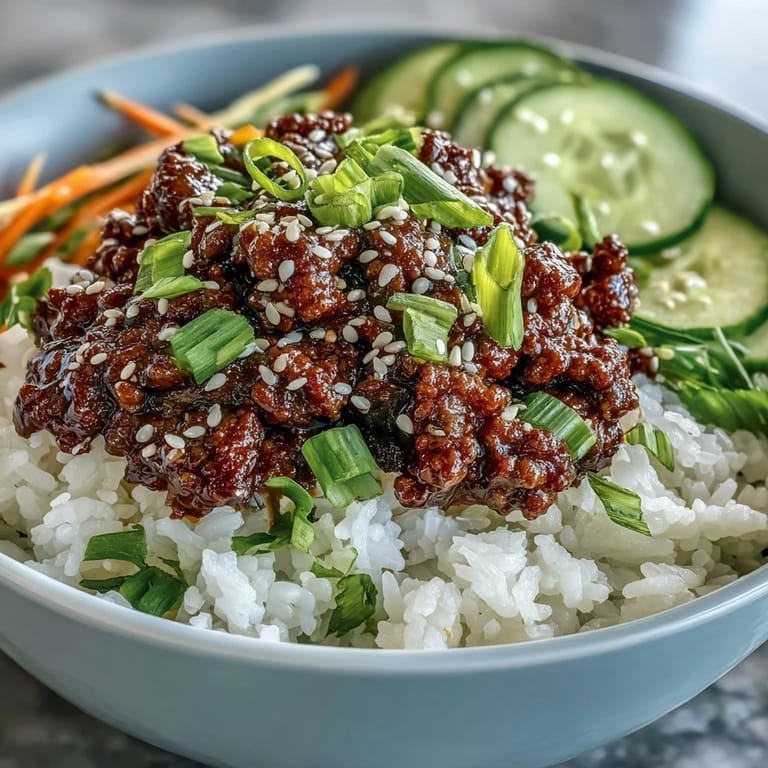
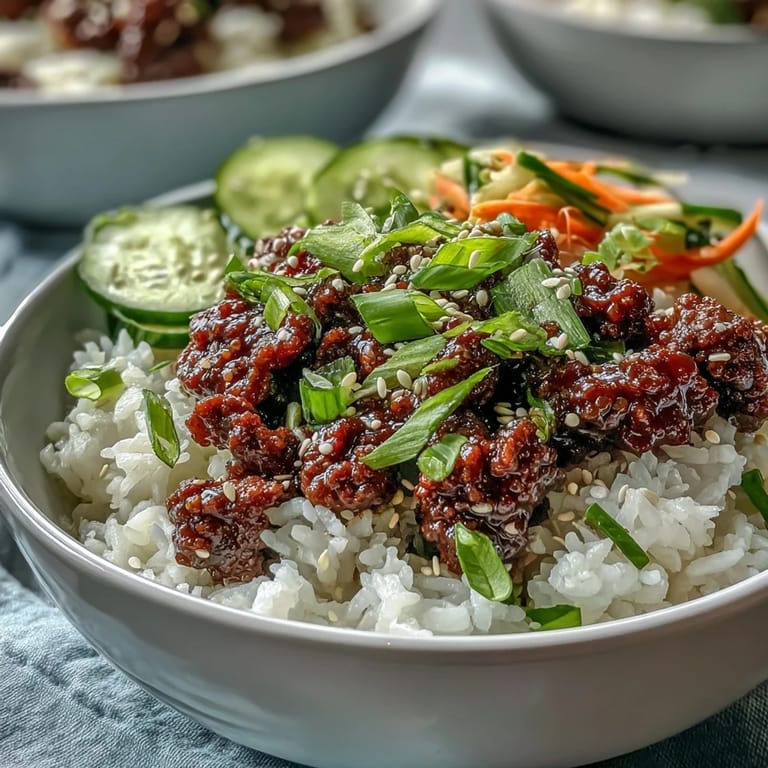
- Divide your warm rice among bowls, mound the seasoned beef on top, and add a generous handful of those pickled vegetables. The contrast of temperatures and textures is when the whole thing comes alive.
- Garnish and serve:
- Scatter more green onions and sesame seeds on top, then eat it while everything's still warm and the vegetables are still cool.
 Save
Save My mom tried this version of the bowl and asked if I'd opened a restaurant, which made me laugh because it's so simple but somehow lands like something special. That's when I realized this dish has that rare quality of making you feel taken care of, even when you're the one making it.
Flexibility Is Part of the Point
This bowl adapts without complaint, which is probably why it became such a regular in my rotation. Ground turkey tastes excellent here, as does chicken, and I've even made it with crumbled tempeh for a friend who doesn't eat meat—the seasoning and technique carry the dish. Tofu works too if you crumble it first and let it get a little crispy in that same skillet before adding the sauce.
The Pickle Vegetables Are Where Magic Happens
I used to make this bowl without the pickles, thinking they were optional, and honestly it was fine. Then I started making them properly and realized they weren't a side note—they were the entire reason this works. The acidity cuts through the richness of the beef and sesame oil, the cooling vegetables offset the warmth, and that snap of radish against soft cucumber creates a rhythm to each bite that keeps you coming back.
Why This Feels Like More Than Just Dinner
There's something about a bowl that feels both nourishing and quick, both simple and thoughtful, that makes it the kind of meal you want to cook when life needs a little steadying. The colors are beautiful, the flavors work in harmony, and you can taste the intentionality in every component.
- Try adding a fried egg on top for richness and extra protein—the runny yolk becomes another sauce entirely.
- If you make extra pickled vegetables, they'll keep in the fridge for days and transform plain rice, grilled fish, or even tacos.
- Taste your beef seasoning before you plate it; if it seems shy, a few extra drops of soy sauce or sesame oil can wake it up in seconds.
 Save
Save This bowl has become one of those recipes I make without thinking, the kind that lives in your hands after a few times. Feed it to someone you care about and watch how they slow down to actually taste it.
Recipe FAQs
- → Can I make this bowl ahead of time?
The seasoned beef and pickled vegetables both store beautifully for up to 4 days. Keep them in separate airtight containers in the refrigerator. When ready to serve, gently reheat the beef and assemble over freshly cooked rice.
- → What can I substitute for gochujang?
Sriracha works well for heat, though it lacks gochujang's fermented depth. For a closer match, mix equal parts red pepper paste and miso. Alternatively, Korean red pepper flakes (gochugaru) with a touch of miso creates similar complexity.
- → Is cauliflower rice a good substitute?
Absolutely. Cauliflower rice absorbs the savory beef juices beautifully while keeping the dish light and low-carb. It cooks faster than regular rice and pairs perfectly with the bold Korean seasonings.
- → How spicy is this dish?
The gochujang adds mild to medium heat depending on your preference. Start with one teaspoon and adjust to taste. Without it, the dish remains gently savory with warmth from ginger and garlic rather than spicy heat.
- → Can I use different proteins?
Ground turkey or chicken work excellently with these seasonings. For vegetarian options, crumbled firm tofu or tempeh absorb the savory sauce beautifully. Adjust cooking time as plant-based proteins need less time to brown.
- → What other vegetables can I pickle?
Thinly sliced red onion, bell pepper strips, or even daikon radish work wonderfully. The quick pickling liquid works on any crisp vegetable. Just keep slices thin for proper texture and quick pickling action.