 Save
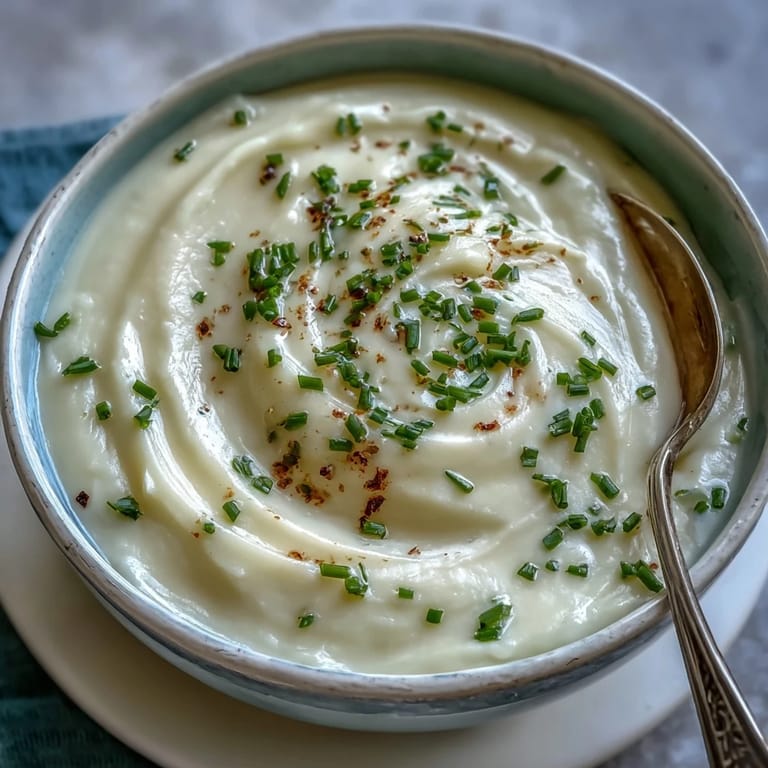
Save There's something about the sound of a spoon hitting the bottom of an empty bowl that tells you everything about a soup. My neighbor stopped by on a gray afternoon last February, and I had just finished a pot of this cream of potato soup—the kind that coats your spoon with velvet before sliding back into itself. She took one taste and didn't say much, just kept eating. That quiet contentment is what drew me back to this recipe again and again.
I made this soup for my son's first day working from home during the pandemic, when we were all figuring out what normal meant. He was nervous about the whole thing, and I thought a warm bowl might help settle his mood. He drank three servings that afternoon between video calls, and later told me it was the thing that made him feel like everything would be okay.
Ingredients
- Russet potatoes (900 g or 2 lbs), peeled and diced: These starchy potatoes break down beautifully into the broth and create that natural creaminess without any cream at all—well, mostly without it.
- Yellow onion (1 medium), chopped: The foundation of flavor; don't skip the caramelizing step even though you're pressed for time.
- Celery stalks (2), chopped: This is the secret nobody talks about—it adds a subtle earthiness that makes people ask what's in your soup.
- Garlic (2 cloves), minced: Fresh garlic only; jarred changes the entire personality of this soup.
- Carrot (1 medium), peeled and chopped: A touch of sweetness that balances the earthiness of the potatoes.
- Vegetable or chicken broth (1 L or 4 cups): Use homemade if you have it, but good quality store-bought works just fine—this isn't a broth-making exercise.
- Whole milk (240 ml or 1 cup): The bridge between broth and cream, keeping everything tasting balanced and not too heavy.
- Heavy cream (120 ml or ½ cup): This is where the velvety texture comes from; don't use half-and-half as a substitute no matter what.
- Unsalted butter (2 tbsp): The starting point for flavor; salted butter will throw off your seasoning control.
- Salt and freshly ground black pepper: Taste as you go; this matters more than you think.
- Ground nutmeg (¼ tsp, optional): A whisper of this transforms the soup from good to memorable—but only if you use fresh, not the stuff that's been sitting in the back of your spice cabinet for three years.
Tired of Takeout? 🥡
Get 10 meals you can make faster than delivery arrives. Seriously.
One email. No spam. Unsubscribe anytime.
Instructions
- Sauté your aromatics:
- Melt butter in a large pot over medium heat, then add onions, celery, carrot, and garlic. You'll know they're ready when the onions turn translucent and the whole kitchen smells like the beginning of something good—about 5 to 7 minutes, though timing matters less than watching them soften.
- Build the soup base:
- Add diced potatoes, broth, salt, pepper, and nutmeg if using. Bring everything to a boil, then reduce the heat and let it simmer uncovered for 20 minutes until the potatoes are so tender they fall apart when you touch them with a spoon.
- Blend to silkiness:
- Remove from heat and use an immersion blender to puree the soup until smooth, or leave it slightly chunky if that's your preference—both are absolutely correct. This is the step where the humble ingredients transform into something that feels luxurious.
- Add the cream:
- Stir in the milk and heavy cream, then return to low heat and warm through gently, stirring occasionally. Never let it boil after the dairy goes in, or the cream can separate and turn grainy on you.
- Taste and finish:
- Give it a final taste and adjust salt or pepper as needed. Ladle into bowls and top with whatever garnishes speak to you—chives, bacon, cheese, or nothing at all.
 Save
Save My mother always said that cream of potato soup was what you made when you wanted someone to feel taken care of. I understood that better the day my neighbor brought me a bowl after I'd been sick—it wasn't fancy, but it meant she'd been thinking of me.
The Comfort in Simplicity
This soup doesn't need anything fancy to be special. It's one of those recipes that proves you don't need a long ingredient list or complicated techniques to make something people genuinely look forward to eating. The beauty is in how few things you need, and how well they work together.
Making It Your Own
Once you've made this soup a few times, you start to see all the ways you can adjust it without losing what makes it work. Some people add a splash of white wine or a pinch of cayenne, others top it with crispy sage or a drizzle of truffle oil. The structure is strong enough to hold changes, which is what makes it so reliable as a foundation.
Serving Suggestions and Storage
Serve this soup as soon as it's finished for the best texture, though it keeps beautifully in the refrigerator for up to four days. You can also freeze it for up to three months, though freeze it before adding the cream if you want to be cautious about separation. Reheat gently on the stovetop with a splash of broth to loosen it back to the right consistency.
- Pair it with crusty bread, a simple green salad, or a grilled cheese sandwich for a complete meal.
- It's equally good as a starter for a dinner party or as a quiet lunch eaten straight from the pot when no one else is looking.
- Leftover soup tastes even better the next day after the flavors have had time to deepen and settle together.
 Save
Save This soup has been there through ordinary Tuesdays and difficult moments alike, which is exactly what good food does. Make it whenever you need a little warmth, and know that you're making something people will remember.
Recipe FAQs
- → Can I make this soup ahead of time?
Yes, this soup stores well in the refrigerator for up to 4 days. Reheat gently over low heat, stirring occasionally. You may need to add a splash of milk or broth to thin it as it thickens when chilled.
- → What type of potatoes work best?
Russet potatoes are ideal because they're starchy and break down easily when cooked, creating a smooth, creamy texture. Yukon Gold potatoes also work well for a slightly buttery flavor.
- → How can I make this soup dairy-free?
Substitute the butter with plant-based butter or olive oil, and use coconut cream or cashew cream instead of heavy cream. Replace whole milk with unsweetened almond, oat, or soy milk for a completely vegan version.
- → Can I freeze this soup?
Yes, but note that dairy-based soups may separate slightly when thawed. Freeze in airtight containers for up to 3 months. Thaw overnight in the refrigerator and reheat gently, whisking to recombine if needed.
- → How do I prevent the soup from being too thick?
If your soup becomes too thick, simply thin it with additional broth or milk until you reach your desired consistency. Add liquid gradually while stirring over low heat.
- → What garnishes pair well with this soup?
Classic garnishes include fresh chives, crispy bacon bits, shredded cheddar cheese, sour cream, or a drizzle of olive oil. Croutons or oyster crackers also add a nice textural contrast.