 Save
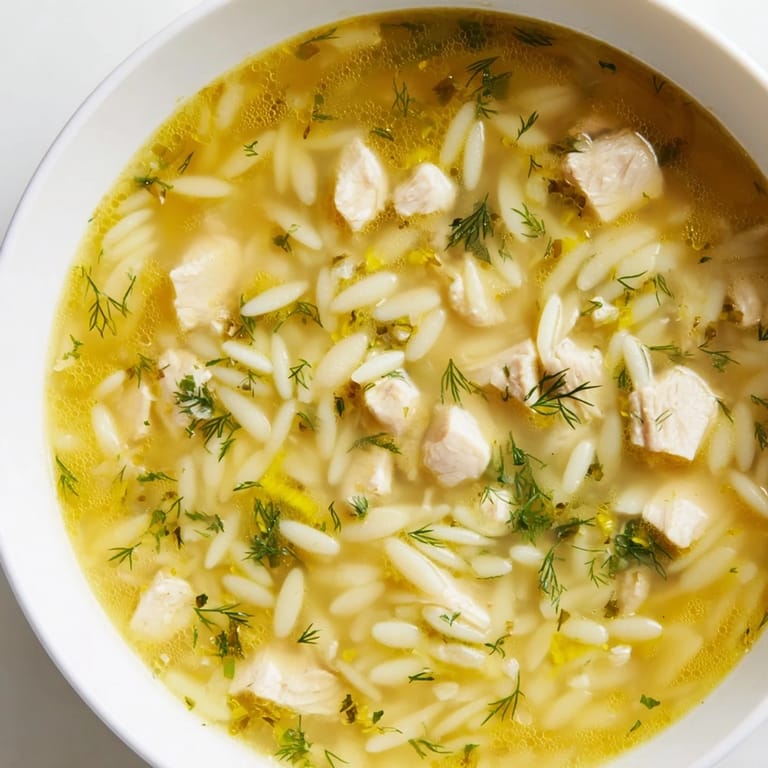
Save The first spoonful of this soup always brings me right back to a rainy Tuesday when I had a head cold and nothing in the fridge but leftover chicken and half a bag of orzo. I threw everything into a pot with lemon and dill, and what came out was so bright and soothing I forgot I was sick. My neighbor knocked on the door an hour later and said the smell had drifted into the hallway. I ladled her a bowl through the doorway, and she texted me that night asking for the recipe.
I made this for my sister after she had her second baby, and she cried a little when she tasted it. She said it reminded her of something our grandmother used to make, though I am pretty sure our grandmother never used orzo. Sometimes a dish just hits you in a way that goes beyond the ingredients. I have been making big batches ever since, and it has become my go to whenever someone needs a meal delivered with love.
Ingredients
- Cooked chicken breast: Rotisserie chicken is my secret shortcut here, and the slightly seasoned skin adds a deeper flavor if you shred some of it in.
- Yellow onion: The base of almost every good soup, and I have learned that chopping it finely means it melts into the broth instead of floating around in chunks.
- Carrots: I like them diced small so they cook evenly and add little bursts of sweetness in every spoonful.
- Celery: It brings a subtle earthiness that balances the brightness of the lemon, and I always save the leafy tops to toss in at the end.
- Garlic: Three cloves might seem like a lot, but they mellow beautifully in the broth and add warmth without overpowering the lemon.
- Lemon: Both the zest and juice are essential, and I learned to add the zest early for aroma and the juice at the end to keep it vibrant.
- Fresh dill: This is what makes the soup sing, and I always buy extra because I end up snacking on it while I cook.
- Parsley: A small handful on top makes everything look and taste fresher, and it is worth the extra chop.
- Orzo pasta: These tiny grains turn creamy as they simmer, and I stir them often so they do not clump together at the bottom.
- Chicken broth: Low sodium is key because you can always add salt, but you cannot take it away once the orzo has absorbed it all.
- Olive oil: I use a good quality one here because it is one of the first flavors that hits your tongue.
- Bay leaf: I forgot this once and the soup tasted flat, so now I always keep a jar in the pantry.
- Dried thyme: A little goes a long way, and it adds an herbal backbone that ties everything together.
- Salt and black pepper: I taste as I go and adjust at the end, because everyone has different preferences.
- Parmesan cheese: Optional but highly recommended, especially if you like a bit of salty richness on top.
Tired of Takeout? 🥡
Get 10 meals you can make faster than delivery arrives. Seriously.
One email. No spam. Unsubscribe anytime.
Instructions
- Start with the vegetables:
- Heat the olive oil in a large pot over medium heat and add the onion, carrot, and celery, stirring them around until they start to soften and smell sweet, about 5 minutes. This is your flavor foundation, so do not rush it.
- Add the aromatics:
- Toss in the garlic, thyme, and bay leaf, and stir for about a minute until your kitchen smells like a cozy bistro. Watch the garlic closely so it does not burn and turn bitter.
- Pour in the broth:
- Add all 6 cups of chicken broth and turn the heat up to bring it to a rolling boil. The bubbles should be active but not violent.
- Cook the orzo:
- Stir in the orzo and let it simmer for 8 to 10 minutes, stirring every couple of minutes to keep it from sticking. It should be just tender, with a slight bite left in the center.
- Add the chicken and lemon:
- Stir in the cooked chicken, lemon zest, and lemon juice, and let everything simmer together for 3 to 4 minutes. This is when the soup starts to smell bright and irresistible.
- Finish and season:
- Fish out the bay leaf, then stir in the dill, salt, and pepper. Taste it and adjust the lemon or salt if needed, because this is your last chance to make it perfect.
- Serve it up:
- Ladle the soup into bowls and top with parsley and a sprinkle of Parmesan if you like. Serve it hot, with crusty bread on the side if you have it.
 Save
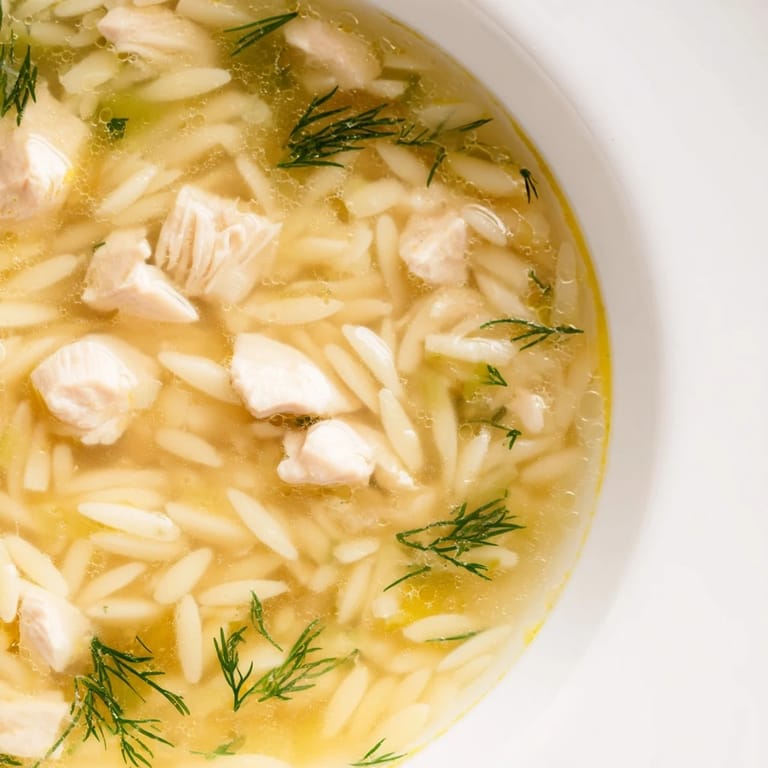
Save One winter evening, I served this soup to a friend who said she did not like lemon in savory dishes. She finished two bowls and asked if she could take the rest home. That is when I realized this soup has a way of converting people, because the lemon does not scream at you, it just lifts everything else up in the most graceful way.
How to Make It Even Richer
If you want to go the traditional Greek avgolemono route, beat two egg yolks in a small bowl and slowly whisk in a ladle of the hot broth to temper them. Then stir that mixture back into the soup off the heat, and it will turn silky and luxurious. I only do this when I am feeling fancy or need to impress someone, because it is an extra step but worth every second. Just make sure the heat is off, or you will end up with scrambled eggs floating in your soup, which I learned the hard way one Thanksgiving.
What to Do with Leftovers
This soup keeps beautifully in the fridge for up to three days, though the orzo will swell and soak up more broth as it sits. I actually love it that way, thick and stew like, but if you prefer it brothier, just add a cup of water or broth when you reheat it. I have also frozen it in individual containers, and it thaws perfectly for quick lunches. Just leave out the fresh herbs until you reheat, because they lose their brightness in the freezer.
Swaps and Variations
If you need this to be gluten free, swap the orzo for white rice or even cauliflower rice, though you will need to adjust the cooking time. I have also made it with turkey instead of chicken after Thanksgiving, and it was just as comforting. For a vegetarian version, use vegetable broth and skip the chicken, adding chickpeas or white beans for protein.
- Try stirring in a handful of baby spinach or frozen peas in the last few minutes for extra color and nutrition.
- If you love garlic, roast a whole head and squeeze the soft cloves into the soup for a sweeter, mellower flavor.
- A pinch of red pepper flakes adds a gentle heat that plays beautifully with the lemon.
 Save
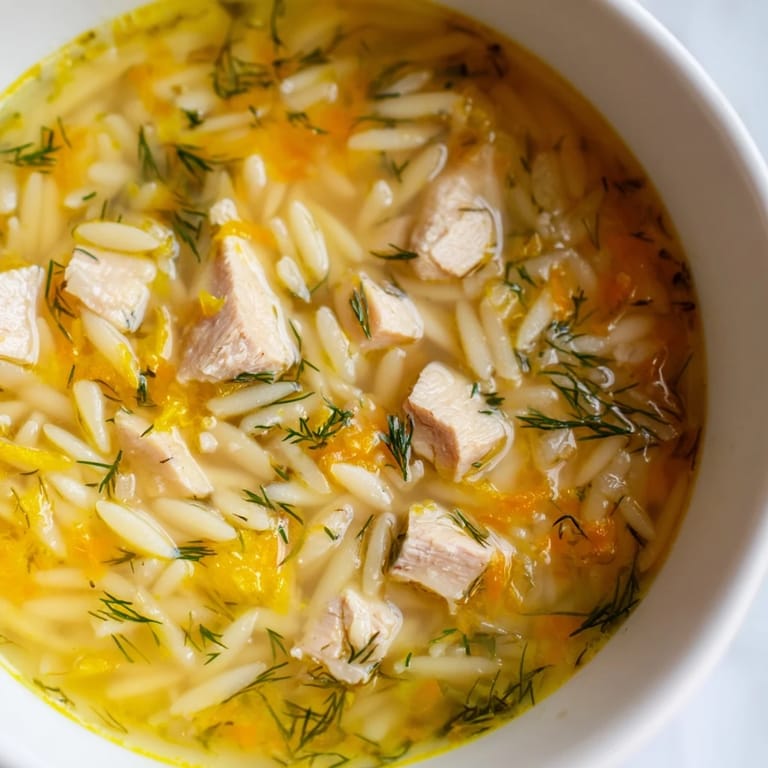
Save This soup has become my love language, the thing I make when I want to show someone I care without saying too much. I hope it brings you as much comfort as it has brought me, one warm bowl at a time.
Recipe FAQs
- → Can I use rotisserie chicken for this soup?
Yes, rotisserie chicken is an excellent time-saving option. Simply shred or dice the meat and add it in the final steps. The flavors from store-bought rotisserie chicken work beautifully in this soup.
- → How do I make this gluten-free?
Substitute the orzo pasta with gluten-free orzo or rice. Cook it according to package directions, adjusting timing as needed. The rest of the soup remains naturally gluten-free when using certified gluten-free broth.
- → What does the avgolemono variation involve?
Avgolemono is a Greek technique where egg yolks are tempered with hot broth before being stirred into the soup off heat. This creates a silky, richer texture. Beat 2 egg yolks, slowly whisk in a ladle of hot broth, then stir the mixture back into the pot.
- → Can I prepare this soup ahead of time?
Yes, this soup stores well in the refrigerator for up to 4 days. Store it in an airtight container. When reheating, warm gently on the stovetop and add more broth if needed to reach desired consistency.
- → What vegetables can I add to this soup?
Fresh spinach, peas, kale, or zucchini are wonderful additions. Stir in delicate greens like spinach during the final minutes, or add heartier vegetables like zucchini earlier in cooking to allow them to soften properly.
- → How do I adjust the lemon flavor?
Start with the recommended lemon juice amount and taste before serving. Add more juice gradually for extra brightness, or reduce it if you prefer subtler lemon notes. Fresh lemon zest adds aromatic citrus without extra acidity.