 Save
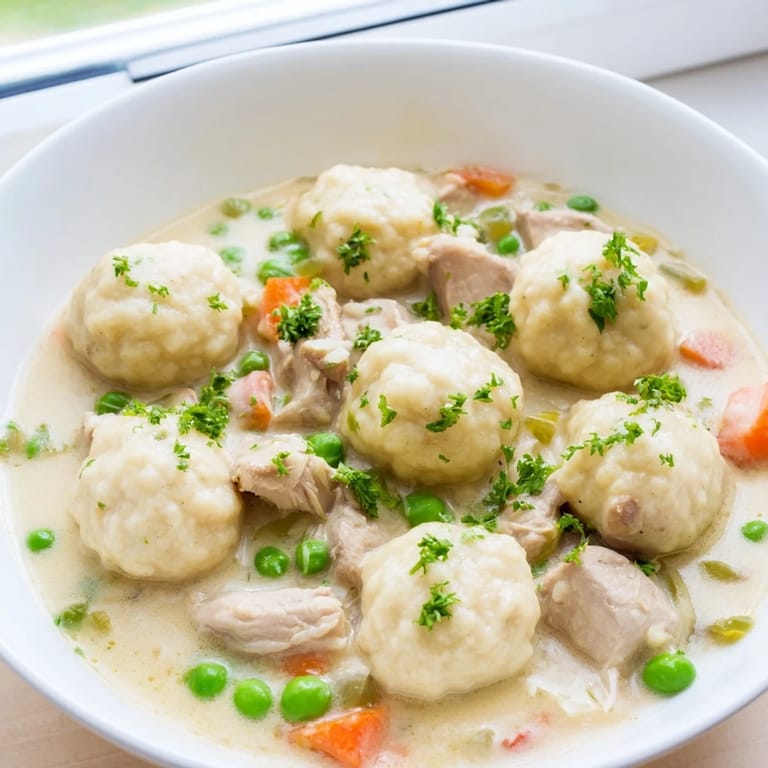
Save The smell of chicken and dumplings simmering on the stove takes me back to snowy Sundays at my grandmother's house. She'd let me stand on a chair to drop the dough into the bubbling broth, her hands steady on my shoulders as I leaned over the pot. Those dumplings were magic, I thought, floating like little clouds and turning something simple into something extraordinary. Years later, when my own family came in from sledding with red cheeks and empty stomachs, I finally understood why she made it so often. It's not just dinner, it's a warm embrace in a bowl.
I once made this for a friend recovering from surgery, and she called me two days later asking for the recipe because her husband couldn't stop talking about it. Something about this dish brings out the storyteller in everyone. Maybe it's the way the house smells while it cooks, or how it demands you slow down and let things simmer. I've learned that the best batches are the ones where I don't rush, where I take the time to actually taste and adjust rather than following the recipe blindly.
Ingredients
- Chicken thighs: Dark meat stays tender through long simmering and adds incredible depth to the broth
- Butter and olive oil: The combination prevents burning while adding that wonderful buttery richness
- Flour: Creates the silky thickened base that makes this a proper stew instead of soup
- Whole milk or cream: The secret to velvety smoothness that coats every spoonful
- Thyme and bay leaf: These herbs work quietly in the background, building layers of flavor
- Peas and parsley: Fresh notes that cut through the richness and add beautiful color
- All-purpose flour for dumplings: Just enough structure to hold together while staying light
- Baking powder: Essential for those fluffy, puffed dumplings that practically float
Tired of Takeout? 🥡
Get 10 meals you can make faster than delivery arrives. Seriously.
One email. No spam. Unsubscribe anytime.
Instructions
- Build your flavor foundation:
- Melt butter with olive oil in your heavy pot over medium heat, then add onion, carrots, and celery. Let them soften and become fragrant, about 5 minutes, before stirring in the garlic for just a minute until it perfumes the air.
- Create the silky base:
- Sprinkle flour over the vegetables, stirring constantly to coat everything evenly. Cook for 2 minutes to remove the raw flour taste, then gradually pour in chicken broth while stirring to prevent any lumps from forming.
- Simmer to perfection:
- Add chicken, thyme, bay leaf, salt, and pepper. Bring everything to a boil, then reduce heat and cover. Let it simmer gently for 20 minutes until the chicken is fork-tender and the broth has thickened beautifully.
- Add the finishing touches:
- Remove the bay leaf and stir in milk or cream along with peas and parsley. Keep the stew at a gentle simmer while you make the dumplings, giving it an occasional stir to prevent scorching on the bottom.
- Mix the dumpling dough:
- Whisk together flour, baking powder, and salt in a bowl. Stir in melted butter and milk just until combined, the dough should be thick and slightly sticky, not overworked.
- Drop and cover:
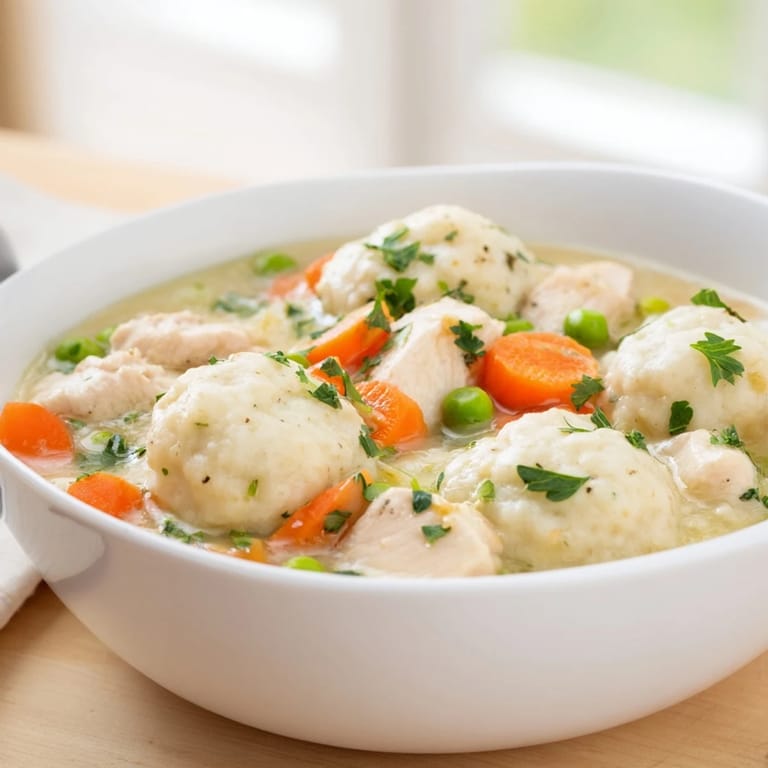
- Use two spoons to drop golf ball-sized portions of dough onto the surface of the stew, spacing them apart so they have room to expand. Cover tightly with the lid and do not lift it for 15 minutes, letting the dumplings steam to fluffy perfection.
- Season and serve:
- Carefully check the seasoning and add more salt or pepper if needed. Ladle hot stew with dumplings into bowls, sprinkle with fresh parsley, and serve immediately while the dumplings are at their fluffiest.
 Save
Save This recipe became our family's snow day tradition almost by accident. Now, whenever the forecast calls for snow, my kids ask if we're making the cloud soup, their childhood name for this dish because the dumplings float like clouds. It's funny how food becomes part of our story, how something so simple can carry so many memories.
Making It Ahead
I've learned through trial and error that the stew base freezes beautifully for up to three months, but dumplings are definitely best fresh. Make the stew portion ahead, let it cool completely, and freeze in portions. When you're ready to serve, thaw and reheat gently, then make fresh dumplings right before serving. The dumplings only take about 20 minutes from start to finish, so it's hardly a burden.
Getting The Consistency Right
The thickness of your broth depends partly on how much liquid your vegetables release and partly on personal preference. I've found that starting with less liquid and adding more if needed is easier than trying to thin an overly thick stew. The flour coating the vegetables is what creates that velvety texture, so don't skip that step or rush it. The consistency should coat the back of a spoon without being gloppy.
Serving Suggestions
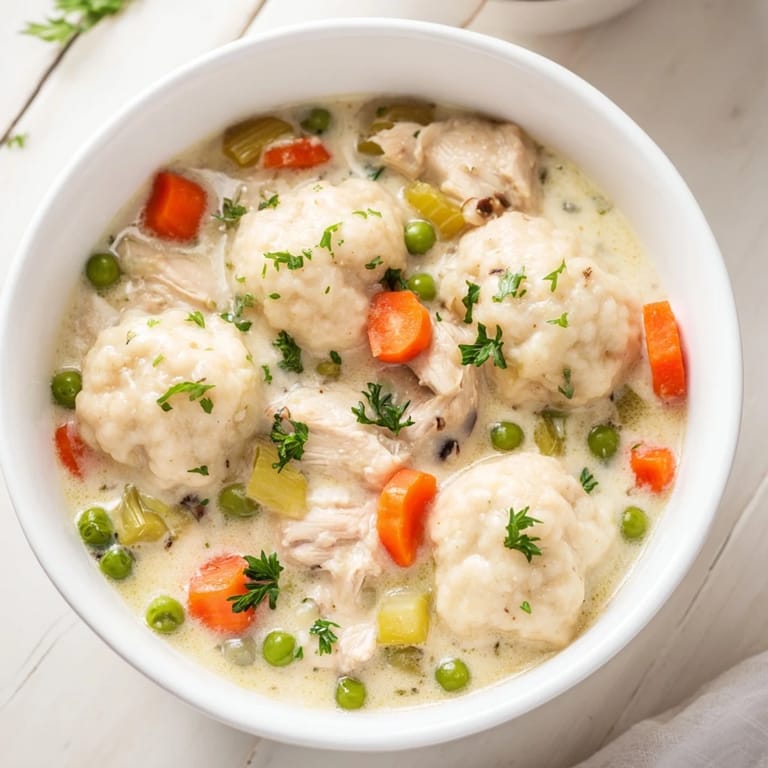
While this is a complete meal on its own, a simple green salad with a bright vinaigrette cuts through the richness nicely. Crusty bread is almost essential for soaking up every last drop of that incredible broth. For weeknight meals, I often skip the salad and just put bread on the table, letting everyone decide how much they want.
- A crisp white wine like Sauvignon Blanc pairs beautifully with the creamy broth
- Leftovers reheat surprisingly well for lunch the next day
- The dumplings will absorb more liquid overnight, so add a splash of broth when reheating
 Save
Save There's something deeply satisfying about making a dish that has comforted generations. Every time I lift that lid and see those puffed dumplings, I feel connected to cooks who came before me, passing down this simple act of nourishment. Good food shared with people you love, that's what matters most.
Recipe FAQs
- → How do I know when the dumplings are fully cooked?
The dumplings are done when they've puffed up significantly and a toothpick inserted into the center comes out clean. This usually takes about 15 minutes of covered simmering. Resist the urge to lift the lid during cooking, as the trapped steam is essential for proper rising.
- → Can I make this ahead of time?
You can prepare the stew base up to 2 days in advance and refrigerate. However, add the dumplings just before serving, as they're best freshly steamed. Reheat the stew gently, then proceed with dropping and cooking the dumplings as directed.
- → What's the best way to reheat leftovers?
Gently reheat on the stovetop over low heat, adding a splash of broth or milk if the mixture has thickened too much. The dumplings will absorb more liquid overnight, so you may need to thin it slightly. Avoid boiling, which can make the dumplings tough.
- → Can I use rotisserie chicken to save time?
Absolutely. Use about 3 cups of shredded rotisserie chicken and add it during the last 10 minutes of simmering, just long enough to heat through. Skip the initial 20-minute simmer time for raw chicken and proceed with adding the cream and peas.
- → Why are my dumplings dense or heavy?
Overmixing the dough develops gluten, making dumplings tough. Mix just until combined—some small lumps are fine. Also, ensure your lid fits tightly to trap steam, and don't lift it during the 15-minute cooking time. Finally, make sure the stew is at a gentle simmer, not a rolling boil.
- → Can I freeze this dish?
Freeze the stew base without dumplings for up to 3 months. Thaw overnight in the refrigerator, reheat gently, and make fresh dumplings. Already-cooked dumplings don't freeze well and become soggy upon reheating.