 Save
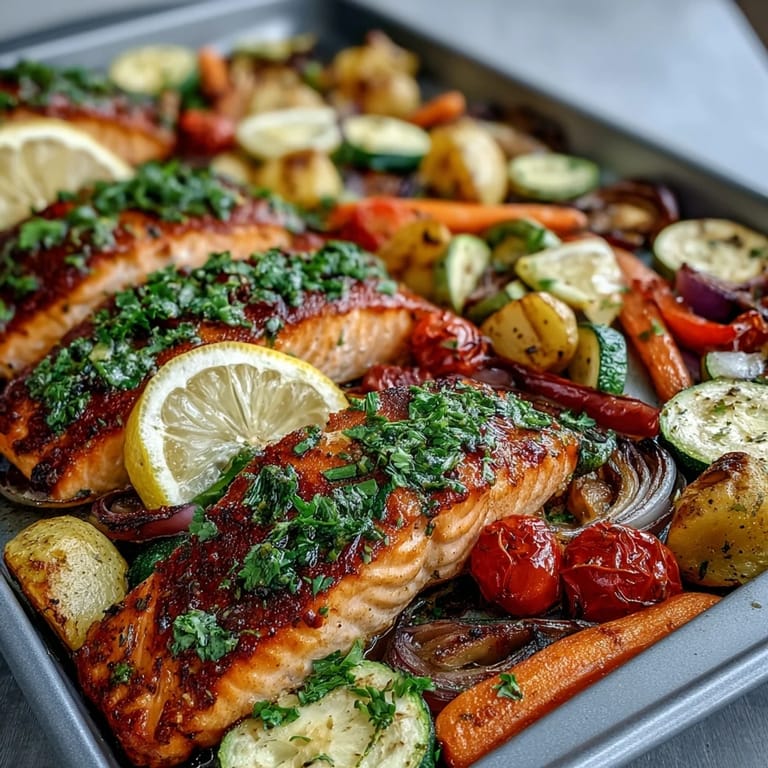
Save My kitchen was chaos that Tuesday evening—I'd promised dinner by six, and the pantry felt embarrassingly bare. Then I spotted four salmon fillets in the freezer and a crisper drawer overflowing with vegetables begging to be used before they wilted. Thirty minutes later, everything came off one golden sheet pan, the kitchen smelled like roasted lemon and herbs, and somehow I'd managed to look like I had my life together. That night taught me that the best meals often come from working with what you have, not what you planned.
I made this for my sister the night before she moved across the country, and we sat at my kitchen counter passing around plates, barely talking, just eating. The salmon flaked into buttery pieces, the carrots had turned sweet and soft at the edges, and somehow a simple sheet pan dinner felt like the perfect goodbye meal. She still texts me photos of her attempts to recreate it, never quite the same but always close enough that it matters.
Ingredients
- Salmon fillets (4, about 5–6 oz each): Pat these dry before cooking—moisture is the enemy of a golden exterior, and it makes all the difference between steamed and properly roasted.
- Olive oil (3 tablespoons total): Use your good oil here, the kind you actually like the taste of, because it seasons everything and you'll notice it.
- Lemon zest: Fresh zest brings brightness that bottled juice can't match; a microplane makes this effortless.
- Red onion: Wedges hold their shape better than thin slices and turn jammy at the edges when caramelized.
- Carrots (2 medium): Cut them into uniform half-inch rounds so they cook at the same pace as everything else on the pan.
- Bell peppers (1 red, 1 yellow): The mix of colors isn't just pretty—different peppers bring subtle flavor variations that make the dish taste more complex.
- Zucchini (1 small): Slice into half-moons rather than rounds to maximize the cut surfaces that get caramelized and crispy.
- Cherry tomatoes (1 cup, halved): Halving them lets the cut sides kiss the pan and burst slightly, releasing all their sweetness.
- Italian herbs (1 teaspoon dried): Buy the pre-mixed blend if you're busy, or make your own from basil, oregano, and thyme—it seasons without overwhelming.
- Fresh parsley: Chopped right before serving, this tastes green and alive in a way dried herbs never will.
- Salt and black pepper: Season generously twice—once with the vegetables, once with the salmon—because underseasonded food tastes like regret.
- Lemon wedges: Fresh at the table, these let each person control how much bright acid they want.
Tired of Takeout? 🥡
Get 10 meals you can make faster than delivery arrives. Seriously.
One email. No spam. Unsubscribe anytime.
Instructions
- Heat your oven and prep your pan:
- Set the oven to 425°F and line a large sheet pan with parchment paper or foil—this is your insurance policy against sticking and makes cleanup genuinely painless. The parchment also helps everything roast evenly instead of browning unevenly on different spots.
- Toss and spread the vegetables:
- In a bowl, combine the onion, carrots, peppers, zucchini, and tomatoes with 2 tablespoons olive oil, the dried herbs, and a generous pinch of salt and pepper. Spread them in a single layer on the pan, giving each piece room to breathe so they roast instead of steam.
- Get the vegetables started:
- Roast for 10 minutes—this head start lets them soften slightly and begin caramelizing before you add the salmon, which would otherwise shield them from the heat.
- Prepare the salmon:
- While the vegetables roast, pat your salmon fillets completely dry with paper towels, brush with 1 tablespoon olive oil, and sprinkle with lemon zest, salt, and pepper. This drying step is what gets you that gentle golden exterior.
- Add salmon to the pan:
- After 10 minutes, pull out the pan and nestle the salmon fillets among the vegetables, making sure they have direct contact with the hot pan. The vegetables will continue cooking and caramelizing around the fish.
- Finish roasting together:
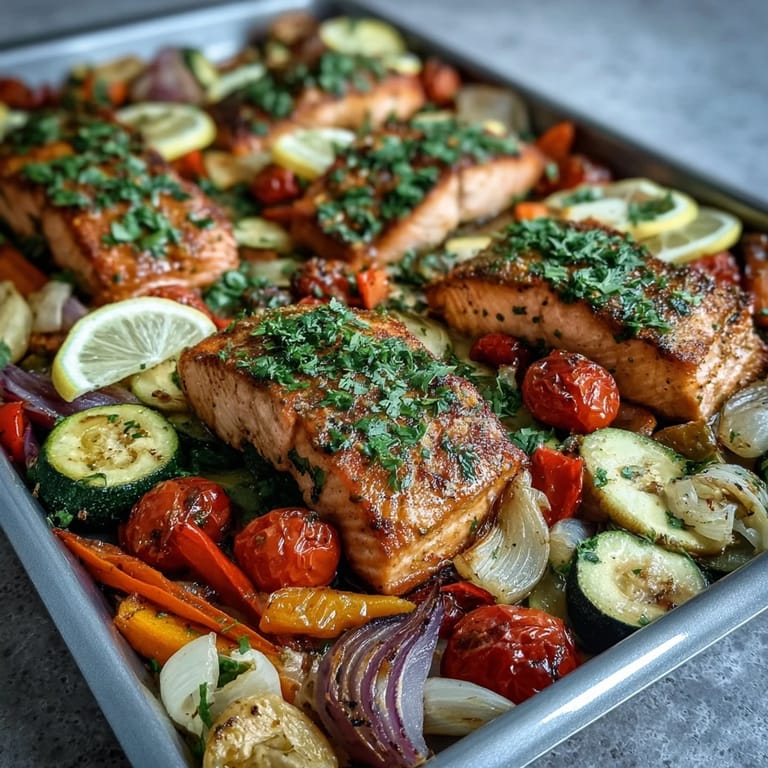
- Return everything to the oven for 12–15 minutes, until the salmon flakes easily with a fork and the vegetables are tender with caramelized, slightly crispy edges. The exact time depends on how thick your salmon is, so start checking at 12 minutes.
- Serve with brightness:
- Remove from the oven, scatter fresh parsley over everything, and set lemon wedges at the table so people can squeeze acid over their own plate. This final freshness makes the whole dish sing.
 Save
Save Last summer, my neighbor knocked on my door asking what smelled so good—ten minutes later she was sitting at my counter with a plate, and we spent an hour talking about everything and nothing while we ate. She's not the type who usually cooks, but something about watching it all come together on one pan made her feel like maybe she could try. Sometimes the best part of a recipe isn't the food itself, but the conversation it creates around the table.
Why This Works So Well
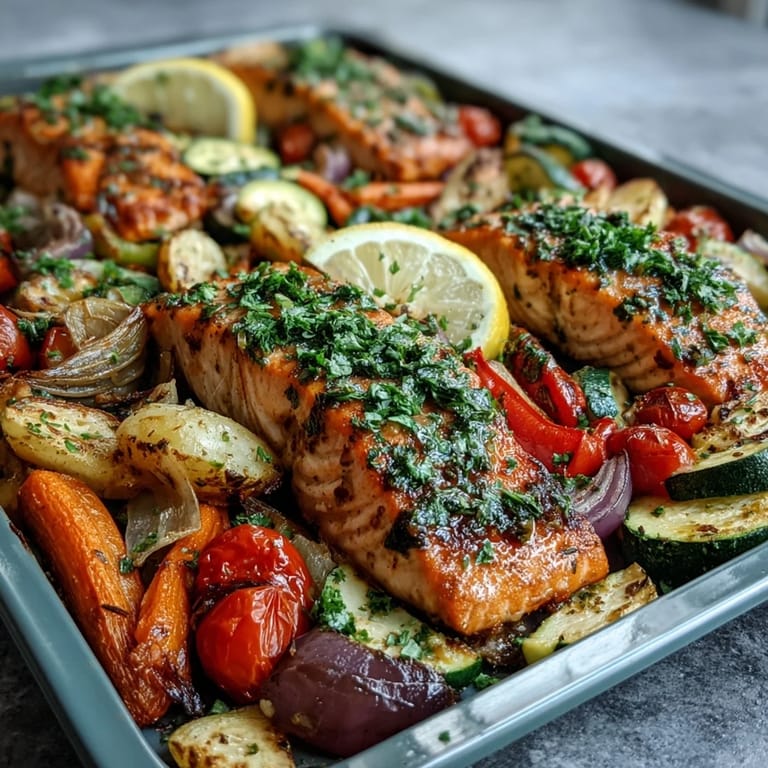
Sheet pan cooking is honest—there's nowhere for mistakes to hide, which means you have to pay attention, but there's also very little that can actually go wrong. The high heat caramelizes vegetables and salmon simultaneously instead of cooking them separately, which sounds simple but changes everything about the flavor. You're essentially creating two dishes at once: tender, flaky fish and deeply caramelized, sweet vegetables, all from one source of heat.
Swapping and Adapting
This recipe genuinely wants you to work with what you have, and honestly, it's better for it. Spring calls for thin asparagus and baby potatoes instead of zucchini and cherry tomatoes, while fall begs for Brussels sprouts cut in half and chunks of sweet potato. Even the herbs can shift—try dill with the salmon, or swap Italian herbs for Cajun spices if you want something bolder. I've made this at least twenty times and it's never quite the same twice, which is part of why I keep making it.
Making It Feel Special
The beauty of this dish is that it feels restaurant-quality without any fuss, which sometimes feels like a small miracle on a Tuesday night. If you want to push it slightly, crumble feta cheese over the top just before serving, or drizzle with aged balsamic glaze so it gets slightly syrupy and glossy. A chilled glass of Sauvignon Blanc beside this makes it feel like you did something intentional, even if you threw it together in fifteen minutes.
- The vegetables are done when their edges are caramelized and slightly crispy, not when they're completely soft.
- Leftovers store beautifully and can be reheated gently or eaten cold as a bright, protein-packed lunch the next day.
- If your pan feels crowded, use two smaller pans instead of fighting with one overcrowded one.
 Save
Save This meal has become my answer when I need something that feels both nourishing and effortless, which turns out to be exactly what most weeknights ask for. Make it, and I promise you'll be reaching for it again and again.
Recipe FAQs
- → Can I use frozen salmon fillets?
Yes, frozen salmon works well. Thaw completely before cooking and pat dry to remove excess moisture. Cooking time may need slight adjustment depending on thickness.
- → What vegetables work best for sheet pan cooking?
Root vegetables like carrots, potatoes, and sweet potatoes hold up well. Bell peppers, zucchini, broccoli, asparagus, and cherry tomatoes also roast beautifully. Choose vegetables that cook at similar rates.
- → How do I know when the salmon is done?
The salmon is ready when it flakes easily with a fork and reaches an internal temperature of 145°F. The flesh should be opaque and slightly firm to the touch. Avoid overcooking to keep it moist.
- → Can I meal prep this dish?
Absolutely. Cook ahead and store in airtight containers for up to 3 days. Reheat gently in the oven at 350°F or enjoy cold over greens for a quick lunch.
- → What seasoning alternatives work well?
Try garlic powder, paprika, cumin, or fresh dill. A honey-soy glaze or herb butter adds richness. Mediterranean seasonings like za'atar or everything bagel seasoning also complement the salmon beautifully.