 Save
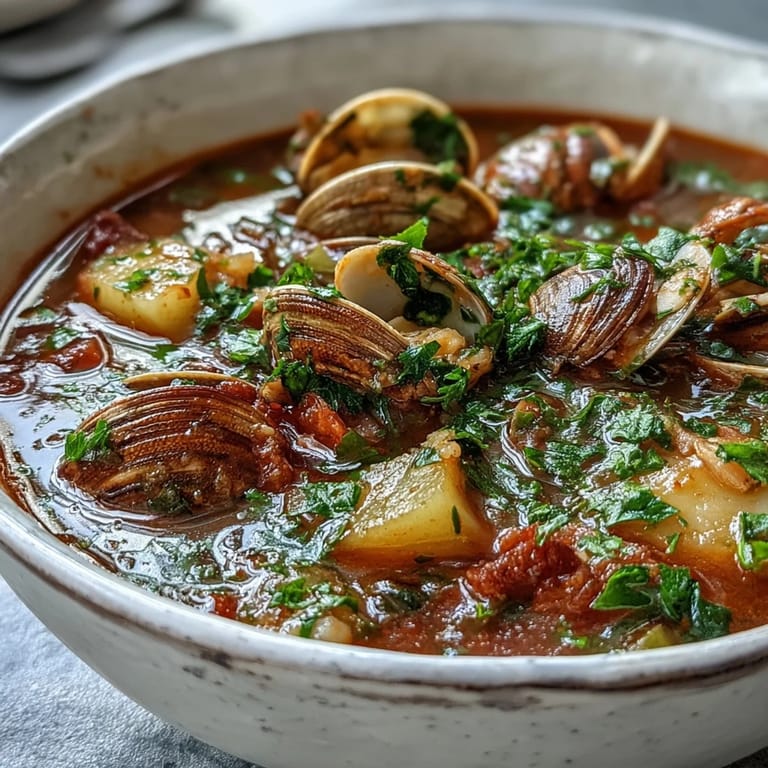
Save There's something about a steaming bowl of Manhattan clam chowder that stops you mid-conversation. My neighbor brought over a pot one October evening when the air had turned crisp, and I watched the way the tomato broth caught the kitchen light—ruby red and alive. She'd spent the afternoon at the fish market, chatting with the vendor about which clams were sweetest, and you could taste that care in every spoonful. It wasn't the creamy, butter-heavy version I'd grown up with, but something lighter, brighter, more honest about the sea.
I made this chowder for my sister's book club last spring, and it became the thing everyone asked for the recipe to. One guest came back to the kitchen three times for seconds, and I realized halfway through her third bowl that she wasn't just eating soup—she was transported back to a trip she'd taken to New England years ago. That's when I understood what my neighbor had known all along: this chowder is a bridge between memory and the present moment, especially when shared with people you care about.
Ingredients
- Fresh clams (littlenecks) or canned chopped clams: Fresh clams give you control over the briny liquid and a sweeter, more delicate flavor, but canned saves you the steaming step and still delivers genuine depth.
- Clam juice: This is your umami backbone—don't skip it or substitute with chicken broth, as it's irreplaceable.
- Diced tomatoes with juice: Canned tomatoes actually work better here than fresh because they're picked at peak ripeness and add body to the broth.
- Yukon gold potatoes: They hold their shape better than russets and have a subtle butteriness that complements the tomato acidity.
- Olive oil: Use something you'd drizzle on bread—this is one of the few ingredients you'll actually taste.
- Onion, celery, carrots, and bell pepper: This aromatic base is your flavor foundation, and dicing everything consistently helps them cook evenly.
- Garlic, thyme, oregano, and bay leaves: These dried herbs are unsung heroes; they build a subtle Mediterranean warmth that makes people ask what your secret is.
- Red pepper flakes: Optional, but they add a whisper of heat that wakes up your palate without overwhelming the briny clam flavor.
Tired of Takeout? 🥡
Get 10 meals you can make faster than delivery arrives. Seriously.
One email. No spam. Unsubscribe anytime.
Instructions
- Prepare your clams:
- If using fresh clams, scrub them under cold running water with a stiff brush to remove sand and grit—this step matters because nobody wants crunchy soup. Steam them in a large pot with 1 cup of water over medium-high heat, covered, for 5 to 7 minutes until they crack open, then remove the meat, chop it coarsely, and strain the cooking liquid through a fine sieve to catch any sediment.
- Build your aromatic base:
- Heat olive oil in your heaviest pot over medium heat, then add onion, celery, carrots, and bell pepper, cooking gently for 6 to 8 minutes while stirring occasionally until they soften and become translucent at the edges. This slow sauté develops sweetness and ensures the vegetables won't be hard and raw when you serve the soup.
- Bloom your aromatics:
- Add minced garlic and stir constantly for just 1 minute—if you let it sit too long, it'll brown and turn bitter, so stay present at the stove. That toasted garlic smell filling your kitchen is the signal you've done it right.
- Build the broth:
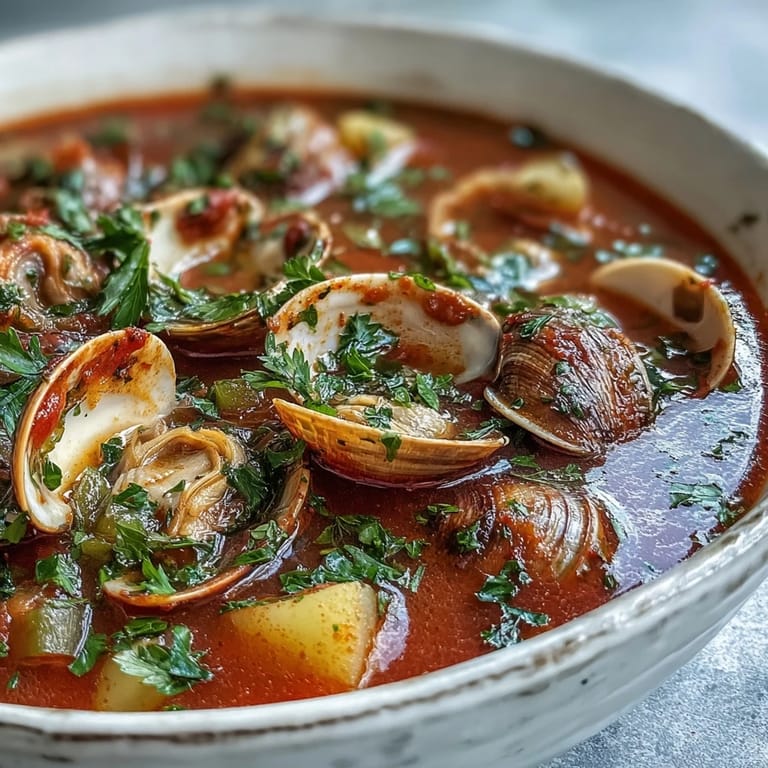
- Add diced potatoes, the canned tomatoes with their juice, clam juice, your reserved clam cooking liquid, thyme, oregano, bay leaves, red pepper flakes if you're using them, salt, and black pepper, then stir everything together until the potatoes are submerged. The mixture should look a bit soupy at this point—it will thicken slightly as the potatoes cook and release their starches.
- Simmer until tender:
- Bring the pot to a boil, then immediately turn the heat down to a gentle simmer and cook uncovered for 20 to 25 minutes, stirring occasionally, until the potatoes break easily with a wooden spoon. This is when your kitchen will smell like the ocean and comfort all at once.
- Unite the clams:
- Gently stir in your chopped clams and simmer for 3 to 5 minutes more to warm them through—overcooked clams turn tough and rubbery, so this is a gentle reheating, not another cooking. Taste the broth here and adjust salt and pepper to your preference.
- Finish and serve:
- Fish out and discard the bay leaves, ladle the chowder into warm bowls, scatter fresh parsley over the top, and serve immediately with crusty bread or oyster crackers. The parsley isn't just decoration—it adds a bright, peppery note that cuts through the richness of the broth.
 Save
Save There was an afternoon when my teenage son came home grumpy from school and sat at the kitchen counter while I was ladling chowder into bowls. He didn't say much, just ate quietly, and by the third spoonful, his shoulders dropped and he started talking about his day. I've learned that good food is a kind of permission—it gives people space to relax and open up.
Fresh vs. Canned: Which Should You Choose?
Fresh clams are a joy to cook with if you have the time and access—the ritual of scrubbing them, hearing them crack open under steam, the ocean smell that fills your kitchen. But here's the honest truth: canned clams work beautifully too, and there's no shame in reaching for them on a Tuesday night when you want chowder but not a trip to the fishmonger. The only real difference you'll notice is that fresh clams give you that bonus cooking liquid, which you should absolutely reserve and use because it's liquid gold. Canned clams are already tender and require no steaming, which means you can have chowder on the table in under an hour from start to finish.
The Tomato Question
If you've only ever had creamy New England clam chowder, the Manhattan version might feel unusual at first—brothy instead of thick, tomato-forward instead of buttery. But that brightness is precisely the point, and it's why this chowder works as well in summer as it does in winter. The acidity of the tomatoes balances the brininess of the clams and keeps your palate interested from the first spoonful to the last. Some people add a splash of vinegar at the end if they want extra zing, but I've found that's rarely necessary if you've used good canned tomatoes.
Making It Your Own
This recipe is more flexible than it appears, and that's part of its charm. I've made it with corn kernels added in summer, with diced cooked bacon stirred in for smokiness, and once with a handful of greens swirled in at the very end. The proportions are forgiving, so if you prefer your chowder brothier, add another cup of clam juice, or if you like it thicker, add an extra potato. The spice level is completely up to you—some people love that red pepper warmth, while others skip it entirely.
- Add bacon for a smoky note that makes people wonder what your secret ingredient is.
- Swap the green bell pepper for red if you want subtle sweetness instead of vegetal bite.
- A squeeze of fresh lemon juice right before serving brightens everything and ties the flavors together.
 Save
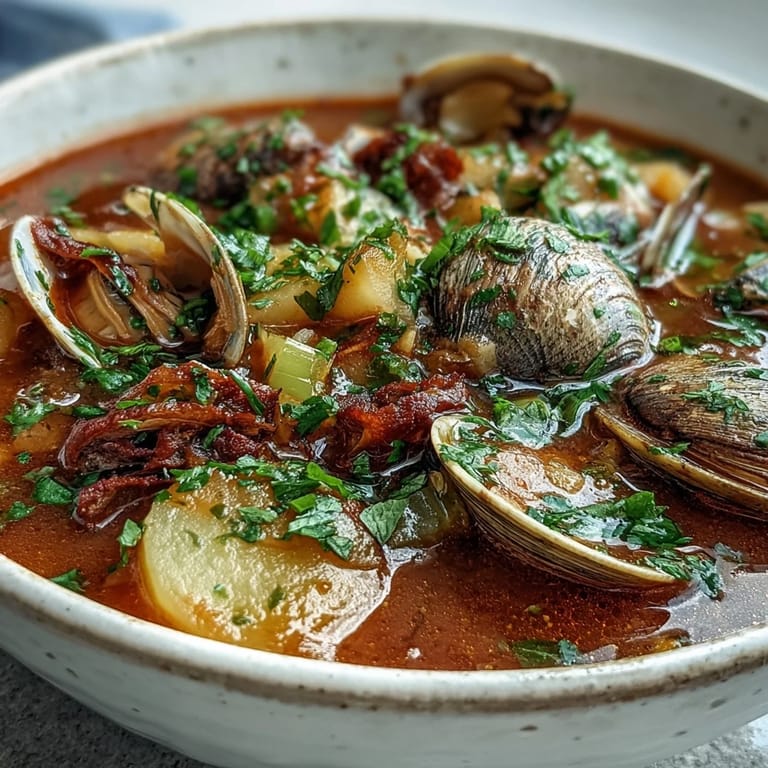
Save This chowder has a way of gathering people, whether it's on a quiet Sunday afternoon or a bustling weeknight. Make it, share it, and watch what happens.
Recipe FAQs
- → Can I use canned clams instead of fresh?
Yes, 3 cups of canned chopped clams work perfectly. Reserve the juice to use as part of your clam broth base for maximum flavor.
- → What's the difference between Manhattan and New England clam chowder?
Manhattan style features a tomato-based broth and is dairy-free, while New England uses a creamy, milk-based broth. Manhattan is lighter and more acidic in flavor.
- → How do I know when fresh clams are properly cooked?
Fresh clams are done when their shells open during steaming, typically after 5-7 minutes. Discard any clams that remain closed after cooking.
- → Can I make this chowder ahead of time?
Yes, the chowder keeps well refrigerated for up to 3 days. Store in an airtight container and reheat gently on the stovetop, stirring occasionally.
- → What type of potatoes work best?
Yukon gold potatoes are ideal as they hold their shape well during simmering while adding a buttery texture. Red potatoes also work nicely.
- → How can I adjust the spice level?
Add or omit the crushed red pepper flakes to control heat. Start with less and add more after tasting, or serve with hot sauce on the side.